
The redundant design of the platform door power supply system refers to a reliability design scheme in the power supply system of the subway/light rail platform door (screen door/safety door) through the additional configuration of backup units, modules or lines that are consistent with the functions of the main equipment, when the main part fails, the backup part can take over the work without interruption to ensure the continuous and stable operation of the platform door.
As the core equipment to ensure the safety of passengers and standardize the order of train boarding and disembarking, the power supply interruption of the platform door will directly lead to the inability of the door body to open and close normally, causing train delays, platform congestion and other operational accidents, so redundancy design is one of the core technical requirements of the power supply system.
Both the drive power supply and the control power supply adopt the multi-module parallel operation mode, and all power modules work online without distinguishing between main and standby. The normal load requirements of the system can be met by N modules, and an additional module is added to share the load together. When any module fails, the remaining N modules can still support full load operation, ensuring stable power output without compromise.
Module hot-swapping: All power modules support online hot-swappability, allowing maintenance personnel to replace faulty modules without interrupting the power supply while the system is in operation, improving system maintainability and availability.
The platform door power supply system introduces two independent 380V three-phase five-wire power supplies from the station low-voltage power distribution system, and realizes automatic switching through dual power switching boxes. When one power supply fails, the other power supply can be automatically put in to ensure the continuous supply of power.
Independent power distribution loop: The drive power supply and the control power supply are set up with independent power distribution circuits to avoid mutual interference and improve the safety of the system.
The output of the drive power supply and the control power supply is set up with multiple independent output loops, each of which supplies power to different platform door equipment or functional modules. When one output loop fails, the other circuits can still work normally, ensuring that part of the function of the platform door system is not affected.
Load balancing distribution: Through a reasonable load distribution strategy, the power load of the platform gate equipment is evenly distributed to each power output loop and power module, avoiding overloading a single loop or module, and improving the stability and reliability of the system.
The above redundancy design measures cooperate with each other to form a multi-level and all-round power system reliability guarantee system, ensuring that the platform door system can maintain stable operation under various fault situations, and providing strong support for passenger safety and normal operation of the subway.
Taking Huiye Da's platform door power supply system as an example, its three-layer redundancy architecture of dual mains power input + N+1 power module redundancy + dual battery pack backup can realize automatic fault switching and seamless connection, with a switching time of less than 20ms, far lower than the 50ms threshold required by the rail transit industry, and can fully adapt to complex operation scenarios such as subway morning and evening peak hours and extreme weather.
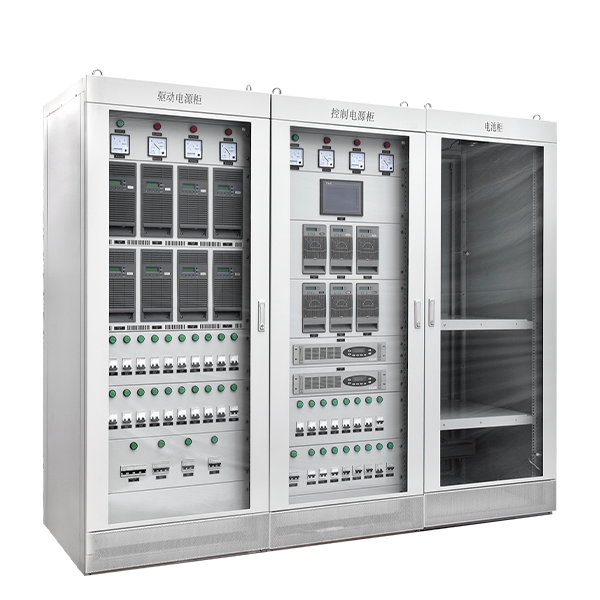
Huiyeda platform door power supply system
The redundant design fundamentally eliminates the risk of "single point of failure" through multiple layers of backup, including dual primary and standby power supplies, N+1 power modules, and dual battery packs. Even if a certain mains power is interrupted or a power module is damaged, the standby unit can be seamlessly switched within milliseconds to ensure that the platform door control power supply and drive power supply are not interrupted, and avoid serious operational problems such as train delays, platform congestion, and passenger safety hazards caused by the inability to open and close the door body.
Faulty modules (e.g., power modules, battery packs) in redundant configurations can be hot-swappable without cutting off the power supply to the entire platform door system or shutting down relevant areas of the station. Operation and maintenance personnel can complete maintenance between normal train operations, greatly reducing the operation interruption time caused by equipment maintenance and reducing indirect economic losses.
Enhance the anti-interference ability of the system and adapt to complex working conditions
The rail transit platform has complex working conditions such as voltage fluctuations, electromagnetic interference, extreme weather (such as heavy rain, high temperature), and the redundant design of multiple power inputs and independent control loop architecture can effectively resist the impact of the external environment on the power supply system. For example, dual mains power inputs come from different substations, which can avoid complete power outages caused by failures of a single substation and improve the system's emergency support capabilities in extreme situations.
Address: Building C, Haixinguang High-tech Industrial Park, at the intersection of Fengxin Road and Zhenmei Avenue, Guangming New District, Shenzhen City

Please fill in the form below and we will contact you as soon as possible after receiving your information. If you have any questions, please call us.